Deepfake vs Photoshop Explained: What Actually Makes Them Different
By Chester Takau · July 2026
A deepfake and a Photoshop edit are not the same category of fake, even though both end with a picture or video that didn't happen the way it looks. Photoshop is a tool a person operates — cloning pixels, adjusting layers, painting out or in what they want. A deepfake is a neural network that studied hours of someone's real face and voice, then generates new frames or audio that never existed, automatically, in a style the network learned rather than a style a human drew. That difference — manual edit versus machine-generated synthesis — is why the two get treated so differently by platforms, courts, and detection tools. Here's exactly where the line sits, and why 2026's biggest twist is that Adobe put generative AI inside Photoshop itself.
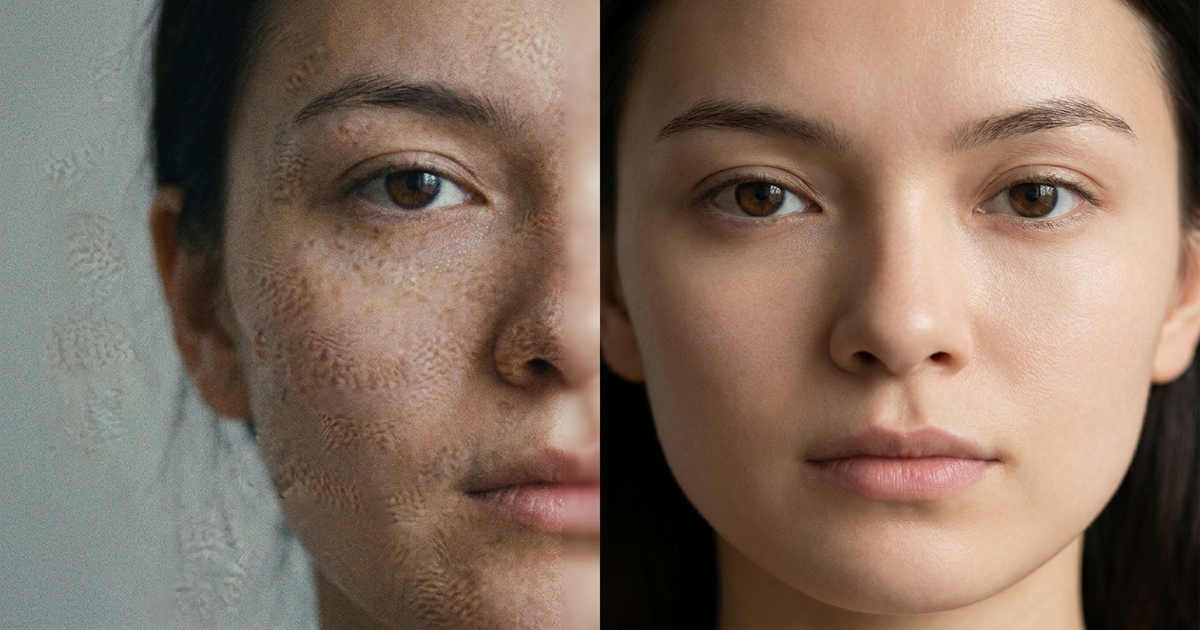
Side-by-side comparison
| Category | Photoshop Edit | Deepfake |
|---|---|---|
| How it's made | Human manually edits existing pixels | Neural network generates new pixels/audio automatically |
| Skill required | Manual editing skill, time per image | Minutes, little expertise once trained |
| Can it move or talk | No — static frame only | Yes — video motion and cloned voice |
| Scale | One image at a time | Automated, produced at volume |
| Old detection tells | Clone-stamp texture, warped lines, shadow mismatches | Extra fingers, eye flicker — mostly fixed by late 2025 |
| Legal treatment (US) | General defamation/harassment law | Named specifically in the TAKE IT DOWN Act (2025) |
Isn't a deepfake just Photoshop for video?
This is the most common question, and the honest answer is: no, but the confusion is understandable. A widely cited camp — including tech writer Kalev Leetaru in a 2019 Forbes piece — argued deepfakes are just the latest chapter in a decades-long history of image manipulation, and that society adapted to Photoshop fine, so it'll adapt to this too. The counterargument, and the one most researchers now hold, is that scale and automation change the threat entirely. Photoshopping a convincing fake face onto a video frame by frame would take a skilled editor days per clip. A trained deepfake model does it in minutes, without expertise, and keeps generating variations indefinitely. That gap — one human editing one image versus one model generating unlimited frames — is the actual dividing line, not just "video versus photo."
Can a deepfake be a still photo?
Yes — this trips people up because "deepfake" got popularized through face-swap videos, but the term describes the generation method, not the medium. An AI-generated still image of a real person doing something they never did is a deepfake if a network synthesized it from learned patterns of that person's likeness, even with zero motion involved. A manually Photoshopped still, by contrast, stays a Photoshop edit no matter how convincing, because a person directed every pixel change rather than a model generating new ones. The three-way spectrum people rarely see laid out plainly: a manual edit (Photoshop), a "cheapfake" (real footage slowed, sped up, or re-captioned with no AI generation involved — like the 2019 doctored Nancy Pelosi video), and a true deepfake (AI-synthesized content). Same intent to deceive, three different techniques underneath.
The Adobe paradox: Photoshop now uses generative AI too
Here's the part almost nobody explains clearly, and it's the biggest 2026 wrinkle in this whole comparison: Adobe added generative AI — Firefly, Generative Fill, Neural Filters — directly into Photoshop. Axios reported on the backlash when this shipped, and the criticism holds up: "made in Photoshop" no longer means "a human manually edited every pixel." When someone uses Generative Fill to synthesize a new background, an added object, or an altered face region, that specific edit was AI-generated inside a tool people still call "photoshopping." The old label survives as a habit of speech, but the neat technical line between "manual edit tool" and "AI generation tool" has already blurred at the product level, not just in public perception.
Do the old spot-the-fake tricks still work in 2026?
Mostly no, and outdated advice is one of the biggest content gaps in this space. Extra fingers, dissolving glasses, and unnatural eye reflections were reliable deepfake tells through 2024. By late 2025, models began producing what The Conversation described as "stable, coherent faces without the flicker, warping or structural distortions around the eyes and jawline that once served as reliable forensic evidence." Online deepfakes went from roughly 500,000 in 2023 to an estimated 8 million in 2025 — about 900% annual growth, per DeepStrike figures cited across 2025–2026 coverage — and the models producing that volume are the same generation that defeated the old visual checklist. If an article you're reading still leads with "count the fingers," treat it as out of date.
Photoshop tells held up a little better because manual editing leaves more consistent physical artifacts — clone-stamp repetition patterns, mismatched noise grain between the edited region and the rest of the frame, warped straight lines near a bend point. But those checks require zooming into a still image at full resolution, and generative-fill edits inside Photoshop increasingly produce the same clean, artifact-free regions a deepfake does.
How do you actually tell the difference on one suspicious image?
A practical order of operations, since no single check is conclusive on its own:
- Check for C2PA Content Credentials first. Adobe, Google, Microsoft, and Sony now embed cryptographic provenance data at creation time recording which tools touched the file. But per Malwarebytes' July 2026 guidance, "missing credentials are not proof that an image is real, fake, human-made, or AI-made" — platforms strip this metadata on upload constantly, so a real photo can show nothing at all.
- Run a reverse-image search. Find the earliest version of the image and who posted it first. This catches cheapfakes and recontextualized real photos as well as synthetic ones.
- Try an AI detector, but treat the score as one weak signal. Detection-only approaches can't keep pace because generative models improve faster than detectors can catch up, which is exactly why the field is shifting toward provenance and watermarking instead of pure detection.
- Ask what's plausible given the source and context. An anonymous account posting a shocking image of a public figure, with no independent corroboration anywhere else, is a bigger red flag than any pixel-level tell.
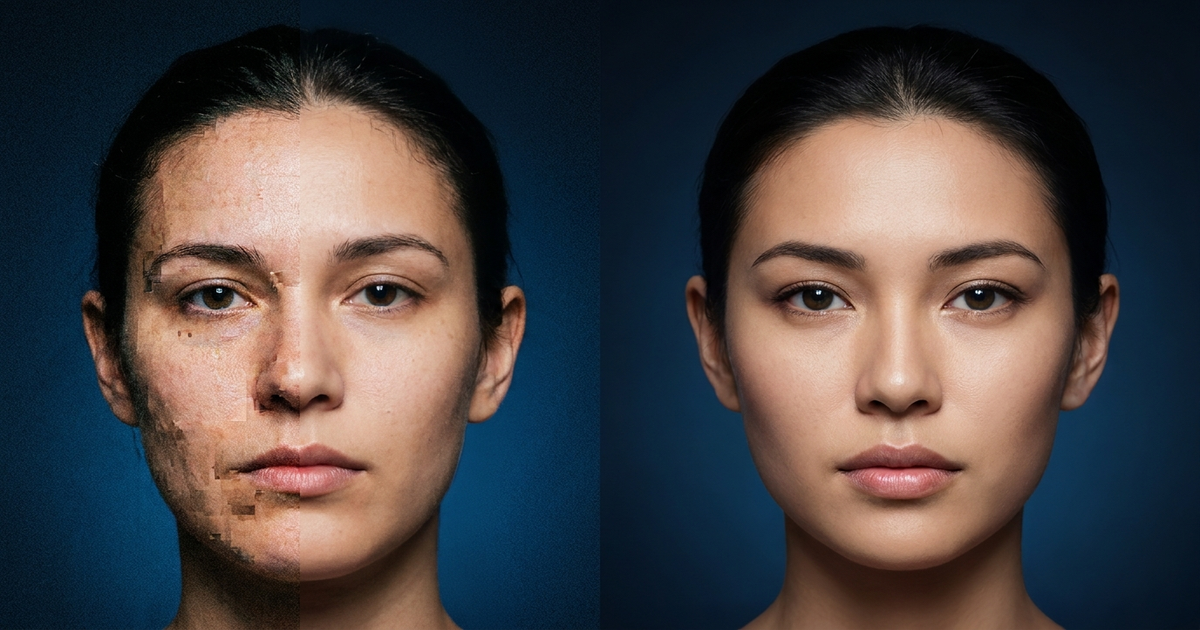
Google's 2026 I/O update pushed this decision partly onto the platform itself: Chrome and Google Search now natively label images as "AI-generated" or "AI-edited" directly in search results, a direct — if incomplete — answer to the ambiguity this whole comparison is about.
Why deepfakes get treated as more dangerous, legally
A manipulated photo and a synthetic video of someone can cause the same harm, but US law now treats them differently. The TAKE IT DOWN Act, signed May 19, 2025, specifically criminalizes nonconsensual intimate "digital forgeries" — the law's own term for deepfakes — and as of May 19, 2026, covered platforms must run a 48-hour notice-and-removal process, enforced by the FTC. That's a real, usable right for an ordinary person: if you find nonconsensual intimate deepfake content of yourself, you can file a takedown request and the platform has 48 hours to act on it, without needing a lawyer first. A Photoshopped intimate image without AI generation typically still falls under older harassment, defamation, or non-consensual-imagery statutes, which vary far more by state and generally move slower. India's IT Rules 2026 went further, adding a 3-hour deepfake takedown obligation alongside mandatory AI-content labeling — part of a broader 2026 tightening of deepfake-specific regulation worldwide that Photoshop edits, as a category, haven't triggered.
The scale problem explains why lawmakers singled deepfakes out. A Photoshop harasser needs to make each fake by hand. A deepfake generator can be pointed at anyone with enough public photos or video of their face, and produce convincing nonconsensual content automatically — which is exactly the failure mode that led xAI to restrict Grok's image generation to paid users in January 2026, and Indonesia to block Grok entirely, after the tool produced sexually explicit deepfakes without a manual editor involved at all.
As UC Berkeley's Hany Farid — Chief Science Officer at GetReal Labs and the researcher most cited on deepfake detection — put it in PBS NOVA's "The Deepfake Detective" interview, the erosion runs deeper than any one fake image or video:
"We don't even know what's real anymore because we consume all of our content from online sources. Online sources have been polluted for a while thanks to AI."
Which one should you actually worry about?
You're evaluating a single suspicious photo:
Check for C2PA credentials, run a reverse-image search, and look for clone-stamp artifacts or noise-grain mismatches — those still catch manual Photoshop edits reasonably well.
You're evaluating a video or voice call:
The old visual tells are mostly dead. Verify through a separate known channel before acting on anything the video asks you to do — that single habit matters more than any detection trick.
You've been targeted by nonconsensual intimate content:
If it was AI-generated, the TAKE IT DOWN Act's 48-hour platform takedown process applies directly. Cite the Act by name in your takedown request.
You're setting up smart home security and want to know what "AI-verified footage" claims actually mean:
The same pattern-recognition concepts behind deepfake generation power the object and face recognition in modern AI security cameras, worth understanding before you trust any device's "verified" label.
The underlying pattern recognition in both deepfake generation and detection comes from the same computer vision field that powers far more mundane consumer tech — including the object-tracking in a household AI-powered robot vacuum mapping your living room. It's the same underlying technology aimed at a very different problem.
Photoshop and deepfakes will keep converging as generative AI gets built into more editing tools by default. The distinction that will actually last isn't "which app made this" — it's whether a human directed every pixel change by hand, or a model learned a pattern and generated the result on its own. Hold onto that line, and the rest of the decision tree — credentials, reverse search, context — gets a lot easier to apply.
Transparency note: This article was researched and written by Chester Takau with AI assistance for research gathering and drafting. All recommendations reflect the author's own editorial judgment.