How to Spot a Deepfake Video in 2026: What Still Works (And What Doesn't)
By Chester Takau · July 2026
Start by assuming you can't tell from watching alone — in controlled testing, people correctly identified high-quality deepfakes only about 24.5% of the time. The old advice (watch for blinking, blurry edges, weird lighting) largely stopped working as 2026-era generators got better. What replaces it is a short list of checks that still catch some fakes, plus a habit that matters more than any single check: verifying the source before you react, share, or wire money. Here's what to actually do, broken down by scenario.
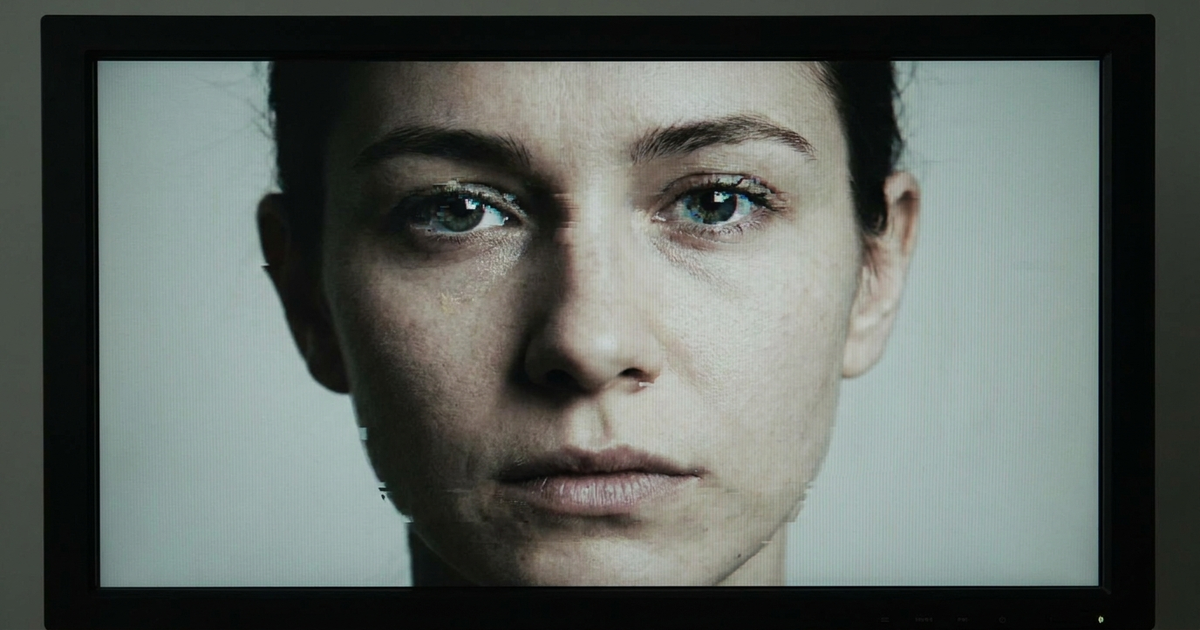
1. The old tricks that no longer work
Blinking too little or too much, blurry edges around the face, and mismatched skin tone were reliable tells a few years ago. They aren't anymore. Hany Farid — the researcher most people in this field defer to on deepfake detection — has said publicly that he no longer trusts his own eyes to verify images or video, describing it as "going blind" as the technology improved. If an article you're reading in 2026 still leads with "check for unnatural blinking," treat it as outdated. The generators that produce today's viral fakes were trained specifically on the outputs that fooled the last generation of detectors.
2. Manual checks still worth trying
Hands, teeth, and ears. These remain the hardest details for generators to render consistently — count fingers, look for teeth that blur together into a single white shape, and check whether an earring or earlobe shifts between frames. None of this is guaranteed on a short, low-resolution clip, but on anything longer than a few seconds it's still worth a look.
Lighting and shadows. A shadow falling the wrong way relative to a light source is a genuine red flag — but it's not proof on its own. Real footage shot with mixed lighting, multiple light sources, or a moving subject can produce shadows that look "wrong" to a casual glance and still be completely authentic. Treat a lighting mismatch as one data point, not a verdict.
3. Does "no watermark" mean the video is real?
No. This is the mistake people make most often once they learn watermarking exists. Google DeepMind's SynthID now survives compression, cropping, and screenshots with roughly 98% reliability on content generated by tools that use it — but that only covers content from participating tools. A video made with a generator that doesn't embed SynthID, or one where the watermark was stripped, shows nothing at all, which people misread as a clean bill of health.
C2PA "Content Credentials" has the opposite failure mode: it's meant to prove a video's origin, but platforms frequently strip the credential manifest during re-encoding, so a real, camera-shot video can lose its provenance data on upload and get wrongly flagged as unverified. Absence of a watermark or credential proves nothing either way — it's a missing data point, not an answer.
4. How to verify a specific viral clip
For a clip that's spreading fast — a politician, a celebrity, a breaking-news moment — run it through this sequence before you share it:
- Grab a keyframe and run it through a reverse-image search to find the earliest version of the clip and who first posted it.
- Check whether the account that posted it is the verified, official source — or a fresh/anonymous account riding the moment.
- Look for a Content Credentials badge if the platform shows one, understanding it can be missing on real footage too.
- Search for the same event or quote being reported by a second, independent outlet. A real viral moment involving a public figure almost always gets corroborated within hours.
- If a detector tool is available, run the clip through it — but read the next section before trusting the score.
This matters beyond gossip. In March 2026, Senate Republicans released an AI-fabricated video of Texas candidate James Talarico appearing to speak on camera for over a minute — a case that only got debunked because reporters ran exactly this kind of source check. Political and celebrity deepfakes are no longer rare; TikTok has seen AI-cloned Taylor Swift, Rihanna, and other celebrities pushing investment scams, and OpenAI shut down its Sora video app in March 2026 after it was used to generate realistic deepfakes of public figures with, in researchers' words, "little effort."
5. Spotting a deepfake on a live video call
This is the scenario with real financial stakes — a fake "CFO" or "boss" on a video call asking for an urgent wire transfer. Real-time face-swap deepfakes still struggle with fast, unscripted movement, so ask the person to do something a pre-rendered or live-puppeted fake handles badly: wave a hand slowly in front of their face, turn fully sideways in profile, or tap the microphone and check the sound syncs instantly.
None of that replaces the actual safeguard, which is procedural, not visual: for any request involving money or credentials, hang up and verify through a separate, known channel — call the person back on a number you already have, not one given to you on the call. Security researchers are consistent on this point: verify before you act, rather than trying to out-judge the video itself.
6. Are free deepfake-detector websites trustworthy?
Treat any "upload a video, get a percentage" tool as one weak signal, not a verdict. Farid and other researchers have repeatedly warned that commercial detectors overstate their accuracy, and that a confidence score can be gamed with adversarial tweaks to the video itself. A high "fake" score is worth investigating further. A low one is not proof of anything — it just means that particular detector, trained on a particular set of past generators, didn't flag it.
Teaching someone who's less tech-comfortable to spot these
The checklist above is a lot to hold in your head, which is exactly why family members — parents, grandparents — are the ones scammers target with fake celebrity endorsement videos and cloned-voice calls. Corridor Crew, a VFX and deepfake-literate YouTube channel, built an entire video around teaching non-experts these red flags in plain language.
"I think in the next 15 minutes I can teach you or anyone of any age how to spot fake AI videos."
If you're walking a relative through this, skip the technical checklist and give them one rule instead: any video asking for money, urgency, or a click — from a celebrity, a "grandchild," or a "boss" — gets verified through a phone call to a number you already had, before anything else happens. That single habit stops more scams than a mastery of watermark standards ever will.
The generative models producing these fakes are built on the same computer vision and machine learning foundations behind most consumer AI tools. If you want the equivalent checklist for text instead of video, how to spot AI hallucinations covers fabricated citations and invented facts the same way this covers faces. And if you're evaluating which AI tools are worth trusting for content work in the first place, AI tools for content creators breaks down what's actually reliable.
Transparency note: This article was researched and written by Chester Takau with AI assistance for research gathering and drafting. All recommendations reflect the author's own editorial judgment.