The History of Consumer Tech Hub: How the "Hub" Moved From Hi-Fi Stack to iPod to Phone
By Chester Takau · November 2026
The history of consumer tech hub is a story of one job changing hands: the device that sits at the centre and ties everything else together. It started with the living-room hi-fi and TV, moved to the personal computer, and in 2001 Steve Jobs gave it a name, the "digital hub," with the Mac in the middle and the iPod as the first big device around it. The smartphone then took the job, and on-device AI is the current contender. The iPod turned 25 on October 23, 2026, which makes this a good moment to trace the whole chain.
What does "consumer tech hub" actually mean?
Three readings are in circulation. The first is the history of consumer electronics in general. The second is CES, the trade show where the industry gathers each January. The third is the 2001 "digital hub" strategy. This article leans on the third because it is the only one where "hub" is a design idea rather than a place, and because it ties directly into the iPod's anniversary. CES gets its own section below.
Where was the hub before computers?
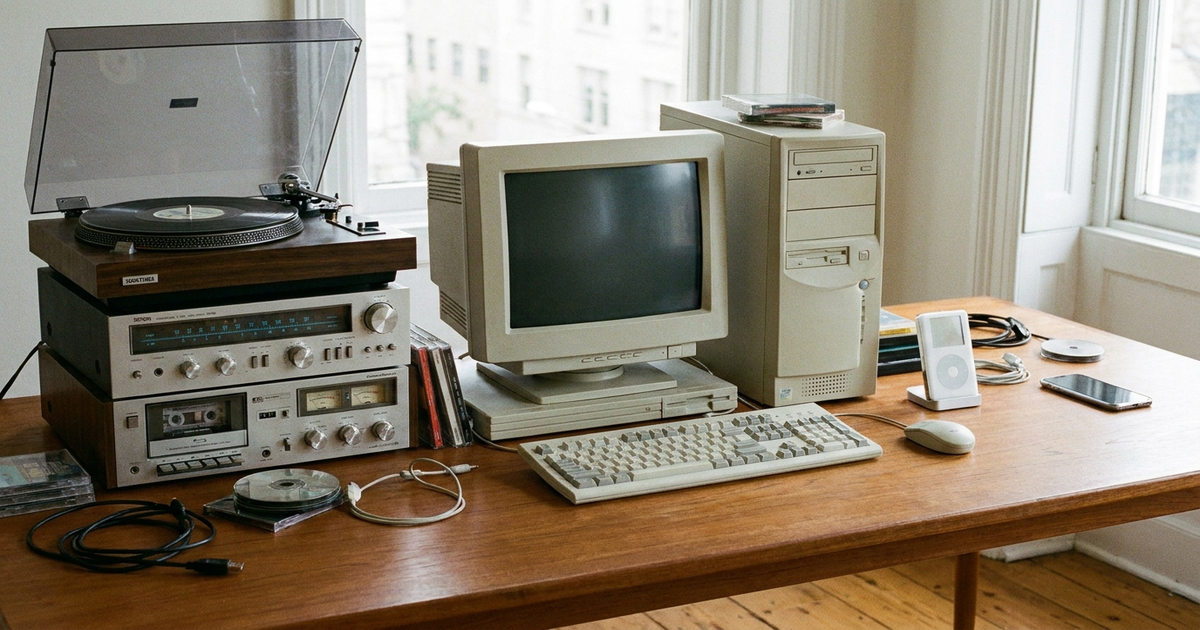
For most of the twentieth century the "hub" was a piece of furniture. The hi-fi stack and the television set were where music and video lived, and every other gadget plugged into them or sat beside them. CrashCourse's history of the period describes transistor radios, Japanese manufacturers taking over consumer electronics, and cheap chips turning up in calculators and then home computers. That last step matters. Once a chip could run software, a device could take over jobs from its neighbours.
The industry also built a place to meet. CES began in New York in June 1967, according to the show's own history page, though sources disagree on exact dates and exhibitor counts for that first edition. The scale today is documented: CES 2026 ran January 6–9 with an audited 148,392 attendees and more than 4,100 exhibitors from 141 countries. CES 2027 is set for January 6–9, 2027, with a Lenovo keynote at Sphere in Las Vegas and a Stellantis keynote on opening day.
What was Steve Jobs's digital hub strategy?
After returning to Apple in 1997, Jobs bet that the computer would become the centre of a person's digital life. Camcorders, cameras and MP3 players would hang off the Mac and use its screen, storage and software. The ColdFusion channel's history of the iPod covers this period, including the MP3 craze, the Toshiba 5GB drive and Tony Fadell's team. The narrator says it plainly:
"so upon his return to keep up with modern times Steve Jobs adopted a digital Hub strategy"
The quote comes from the video's auto-generated captions, so small wording errors are possible. The line sits at about 1:14 if you want to hear it yourself.
How did the iPod fit into the hub?
Apple unveiled the iPod on October 23, 2001 at its Infinite Loop campus. It cost $399, held 5GB, and was rated for up to 10 hours of battery. It went on sale November 10, 2001. Per MacRumors, Apple had sold 100 million by April 2007 and more than 304 million by 2011, and the iPod touch was discontinued on May 10, 2022.
The hub design is clearest in the early limits. The iPod was tied to iTunes and, according to a dpa wire report, worked only with Macs at first, when Macs held less than 3% of the market. Windows support arrived in 2002. Apple sold more than 40 million iPods by the end of 2005. The device was a satellite, and the computer was the point. Fadell has said the iPhone would never have existed without it.
There is a real argument about how much credit the iPod deserves. NPR's Apple-at-50 piece says it "kick-started" Apple's rise in the 21st century. The 99-cent single, which broke albums apart, drew its own objections. Jay-Z refused to sell American Gangster on iTunes in 2007 for that reason.
When did the phone take over as the hub?
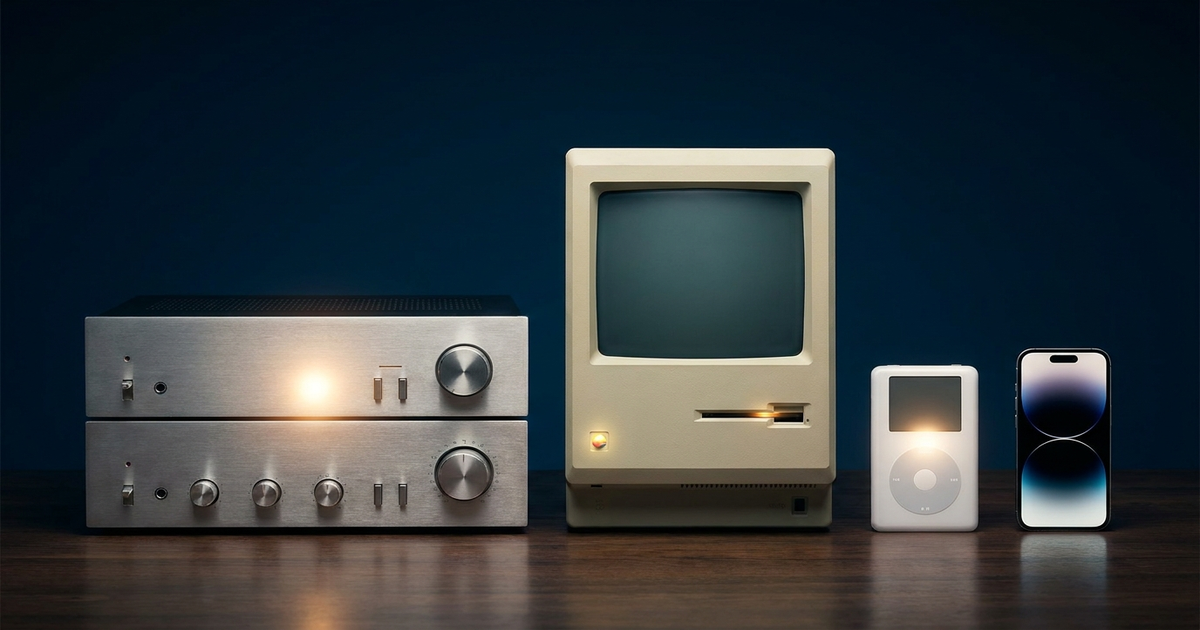
The iPhone absorbed the music player, the camera and the browser, and the computer stopped being the thing everything else plugged into. The satellites became apps. The hub moved from a desk to a pocket, and the cable-and-sync routine that defined the iPod era disappeared with it.
The phone is now only one of several contenders. Smart-home speakers, hubs and AI assistants each claim the centre of the household, and CES 2026 centred on on-device AI. Whether any one device keeps the job is open. The Computer History Museum's "Extended Reality: Visions of the Future" exhibit, running October 1, 2026 to March 28, 2027, shows more than 100 devices from Sutherland's head-mounted display to Apple Vision Pro and Ray-Ban Meta glasses, a reminder that every era has had a candidate for what comes after the screen.
The hub, era by era
| Era | The hub | What connected to it | What ended its run |
|---|---|---|---|
| Mid-20th century | Hi-fi stack / TV | Radios, record players, tape decks | Cheap chips made small, software-driven devices possible |
| Home-computer years | Personal computer | Peripherals, early media software | Devices began to do more of the work themselves |
| 2001 onward | Mac as "digital hub" | iPod via iTunes, cameras, camcorders | Satellite devices absorbed into one pocket device |
| Smartphone era | Phone | Apps replace separate gadgets | Still contested by home hubs and assistants |
| Now | Phone, smart home, on-device AI | Wearables, speakers, glasses | Unresolved |
Did Apple bring the iPod back for the anniversary?
No. Some fans hoped for a new iPod with modern hardware and streaming, but Apple only hid an interactive original iPod on the Apple Music "Page Not Found" screen. Reports say it has a working click wheel, song previews, a Breakout-style game and 1,029 songs, a nod to the "1,000 songs in your pocket" pitch. It is a web toy, not a product.
Questions people are asking
Was the iPod or the iPhone the real turning point for Apple?
Fadell's view is that the iPhone depended on the iPod, and NPR makes a similar case. The iPod proved Apple could win a consumer category outside computers. Both claims can be true.
Why don't devices last like they used to?
People disagree. Critics cite the 1920s–30s light-bulb cartel and software updates that end support. Others point to normal wear, older designs that were over-built, and buyers who want frequent upgrades. The sources I found don't settle it.
Is retro tech really back?
Exhibitors at CES 2026 reported strong interest in retro products such as vinyl and arcade machines. I left out the trend-piece statistics I could not confirm.
Sources
- MacRumors — iPod 25th anniversary, October 23, 2026
- Spokesman-Review (dpa) — 25 years of iPod, October 21, 2026
- NPR — Apple at 50, April 1, 2026
- 9to5Mac — Apple Music iPod Easter egg
- CES — history of the show
- Computer History Museum — Extended Reality: Visions of the Future
- CrashCourse — The Cold War and Consumerism, Computer Science #24
- BGR — Will Apple release an iPod anniversary edition?
Updated November 2026.
Transparency note: This article was researched and written by Chester Takau with AI assistance for research gathering and drafting. All recommendations reflect the author's own editorial judgment.