What Is an AI Accelerator Chip? A Plain-English Definition
By Chester Takau · July 2026
TL;DR
- An AI accelerator chip is hardware built to do one thing fast: the matrix math behind AI, instead of general computing
- GPU, NPU, TPU, and ASIC are all types of AI accelerator — they differ in flexibility, power draw, and where they run
- If you own a recent phone or laptop, you probably already have one — Apple's Neural Engine and Intel/Qualcomm NPUs ship standard now
- Nvidia still holds roughly 80-85% of the data-center accelerator market in 2026, even as Google, Amazon, and Anthropic build their own custom chips
- TOPS (trillion operations per second) measures raw speed, not whether the chip is actually being used by the apps on your device
An AI accelerator chip is a piece of hardware designed to do one narrow job extremely well: the repetitive matrix multiplication that neural networks run millions of times per second. A regular CPU can technically do that math too, but it's built for general-purpose tasks, so it does AI math slowly and wastefully by comparison. An accelerator strips out everything a CPU needs for general computing and rebuilds the chip around just that one workload, which is why the same task can run 10-100x faster and use a fraction of the power. GPU, NPU, TPU, and ASIC are all specific flavors of accelerator — not competing categories, just different tradeoffs on the same idea.
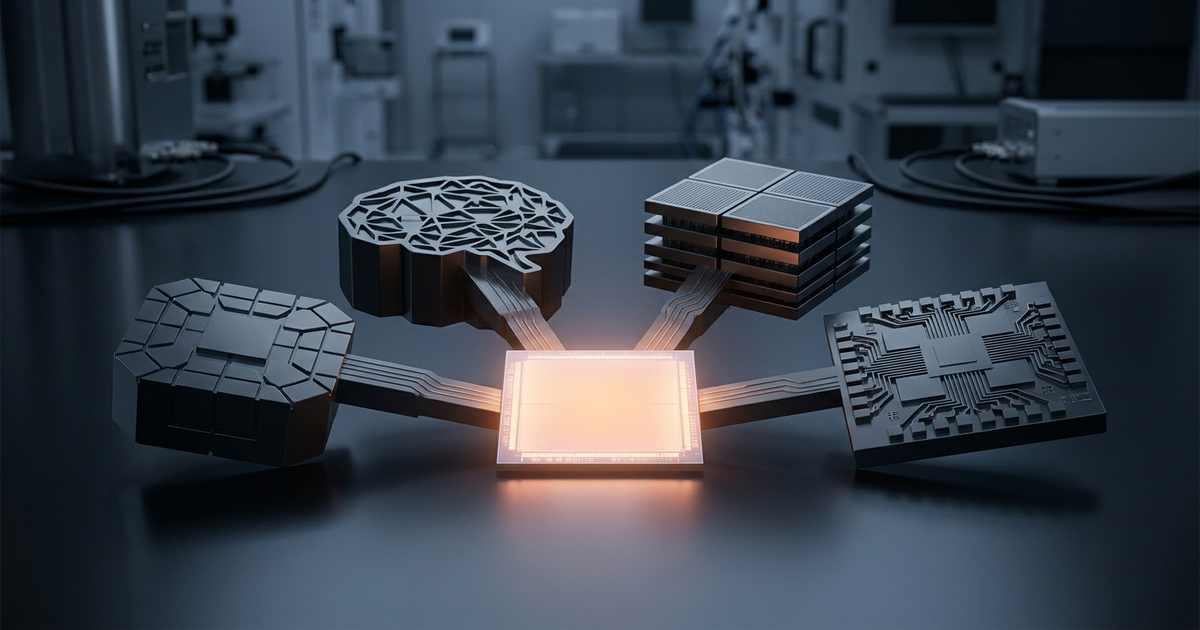
Is it just a fancy GPU?
No — a GPU is one type of AI accelerator, not the definition of the category. GPUs were originally built to render graphics, which happens to involve the same kind of parallel math AI needs, so they got repurposed and are now the dominant chip for training large models. But "AI accelerator" is the umbrella term, and it also covers chips built from scratch for AI with no graphics heritage at all — Google's TPUs and the custom ASICs hyperscalers are now designing with Broadcom and Marvell. A GPU is flexible enough to run almost any AI workload; a purpose-built accelerator usually trades that flexibility for even more speed and efficiency on a narrower job.
NPU vs GPU vs TPU vs ASIC — what actually separates them?
Think of it as a spectrum from general to specialized. A GPU sits in the middle — thousands of small cores built for parallel math, flexible enough for training and inference alike, which is why Nvidia's data-center chips (and now the Vera Rubin platform launched at CES 2026) dominate the industry. An NPU (neural processing unit) is a smaller, low-power version of the same idea built into phone and laptop chips specifically for on-device inference — Apple's Neural Engine and the NPUs inside Intel Core Ultra and Qualcomm Snapdragon chips are NPUs. A TPU (tensor processing unit) is Google's custom silicon, built only for tensor math with no graphics capability at all — the 7th-generation Ironwood TPU packs 192 GB of memory per chip and scales to superpod clusters built purely for AI. An ASIC (application-specific integrated circuit) is the broadest term underneath TPUs and similar chips: hardware etched for one exact task, offering the best possible efficiency but zero flexibility if the task changes. Move down that list and you trade general-purpose flexibility for power efficiency on a narrower job.
Easy English Tech's breakdown above maps all four processing units side by side if you want the visual version of this comparison rather than reading it in text.
Do you already own an AI accelerator chip?
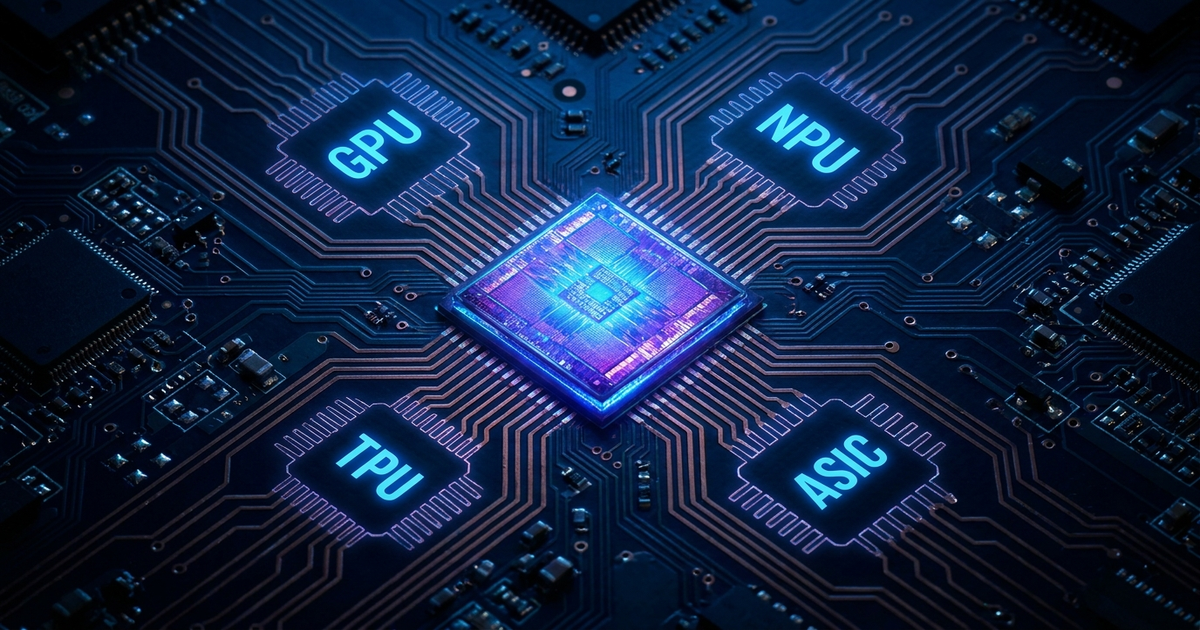
Almost certainly, yes. If you've bought a phone or laptop in the last few years, it likely already has a dedicated AI accelerator sitting inside the main processor — Apple's Neural Engine has shipped in every iPhone since the X, and Google's Tensor chips have run one in every Pixel since the 6. On the laptop side, this is the exact NPU hardware covered in AI laptop features explained, which is what makes a machine qualify as a "Copilot+ PC" in the first place. The accelerator has quietly become standard equipment; most people just never see the term on a spec sheet.
What does TOPS actually mean, and do you need 40 of them?
TOPS stands for trillion operations per second — a raw speed measurement for how much AI math a chip can push through, not a guarantee that anything on your device is using it. Microsoft set 40 TOPS as the NPU threshold for its Copilot+ PC branding, which is enough to run features like real-time image generation or live translation locally without sending data to the cloud. But TOPS is a ceiling, not a workload report: a 10-TOPS NPU from a couple of years ago genuinely struggled to beat the CPU or GPU on most everyday tasks, which is exactly why critics have called early NPU marketing a gimmick. The number matters less than whether the specific app you use — a local transcription tool, an offline photo editor, a privacy-focused chatbot — actually routes work to the NPU instead of quietly falling back to the GPU.
Training chips vs inference chips — why does the difference matter now?
Training a model means teaching it from scratch across massive datasets — a slow, extremely compute-hungry process that favors the biggest, most flexible chips, which is why Nvidia's GPU platforms lead there. Inference means using an already-trained model to answer a single question or generate one image — cheaper per task, but it now happens so often, at such scale, that inference is starting to outpace training as the industry's real demand driver in 2026. That shift is exactly why Google built its Ironwood TPU specifically for inference rather than training, and why Anthropic committed to as many as 1 million Google TPU chips for its own inference needs this year. The chip you'd want for building a model and the chip you'd want for running one thousands of times a day aren't the same chip anymore.
Is it worth paying extra for a dedicated AI chip right now?
If you run AI features locally — offline voice transcription, on-device photo editing, a privacy-focused assistant that doesn't phone home — a strong NPU pays for itself in battery life and speed, since it does that specific math using far less power than the CPU or GPU would. If most of your AI use is just typing into ChatGPT or Claude in a browser, the work happens on someone else's data-center chip regardless of what's inside your laptop, and paying extra for a bigger NPU buys you very little today. The honest buying advice: pay for it if you can name the specific local-AI feature you'll use weekly, not because the spec sheet lists a TOPS number.
For a closer look at where these chips end up in consumer hardware, our AI security camera guide covers devices that run on-chip inference to detect people and package deliveries without sending video to the cloud. And if smart speakers are more your interest, our AI smart speaker roundup breaks down which models actually process voice locally versus routing everything through the cloud.
Transparency note: This article was researched and written by Chester Takau with AI assistance for research gathering and drafting. All recommendations reflect the author's own editorial judgment.